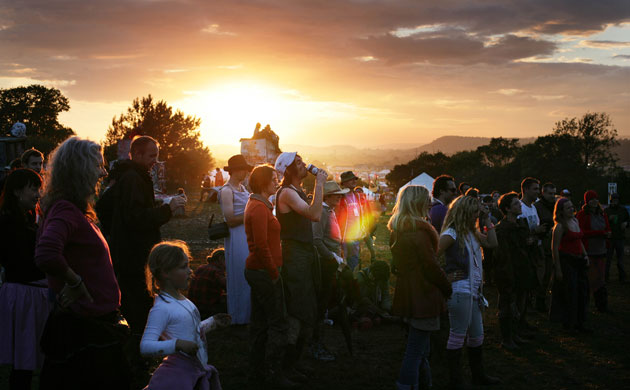
Rachel has asked me to give some ideas and suggestions for how to get the best out of your camera while attending a festival. So I'm going to talk about football. If you knew me, that wouldn't come as any surprise...
I love photographing at football, and my collection of shots from matches I've been to is something I really treasure. Other people seem to really like it too, and occasionally they've even
paid me. But - and this is really my whole point - I rarely bother taking photos of footballers, or the stuff going on on the pitch.
In the past, on the few occasions I happened to have a camera at a game, I did the obvious thing that everyone does, and tried to take a photo of the match in front of me. Regrettably, the result is that the only photographic memories I have of a trip to Milan's remarkable San Siro stadium are some blurry, distant shots of the pitch, seemingly from miles up in the air. I wish I'd captured the little details around me: the edgy (and well armed) teenage Carabinieri recoiling from the dynamite-like firecrackers being thrown by the slightly insane Calabrians in the tier below; the more sedate Milanesi lining the grubby chairs of the middle tier with magazine pages to save their expensive chinos.
At football, the mainstream media use the finest capabilities of their multi-thousand pound equipment, they get perfectly sharp images of their target, and they reduce the background to a featureless blur. The result is a thousand identical photos of the same footballer kicking a football. Everything else is simply lost. The media's photography of sport is dull, and they're better at it than me, so why should I try to be like them?
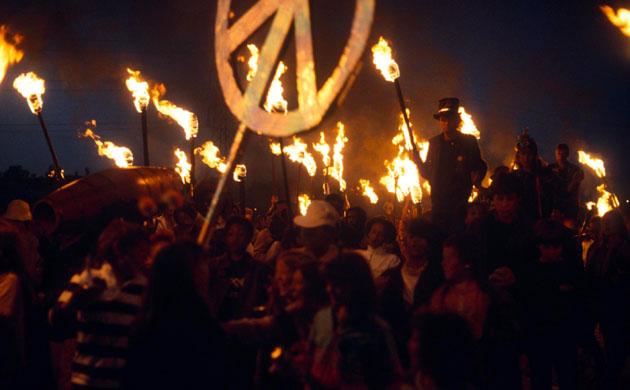
There is a joy to being part of a big event that watching on television can never reproduce, and it's a joy that is great fun to capture on film. At football, turning the camera round and pointing it at the people around me captures something wonderfully genuine: the tension, the joy, the sheer skill required to keep a cigarette firmly clamped in the mouth while yelling "hooray!" through your nose.
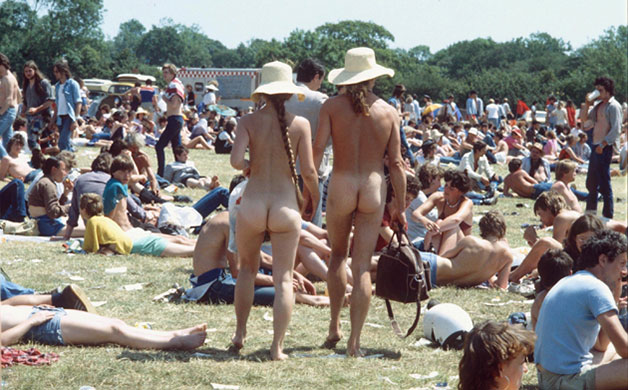
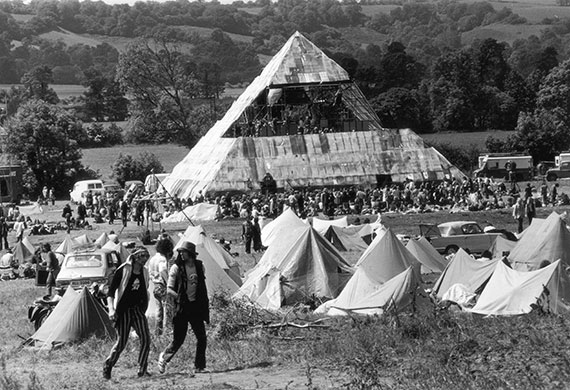
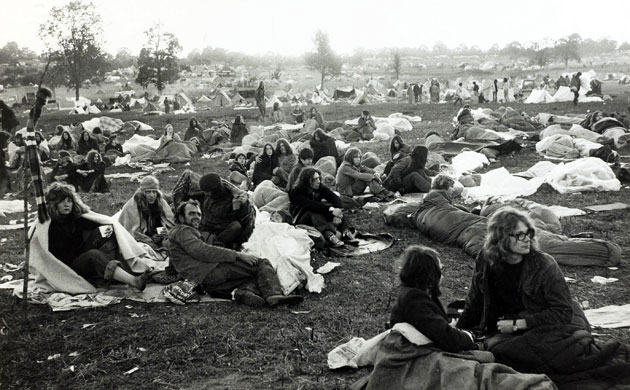
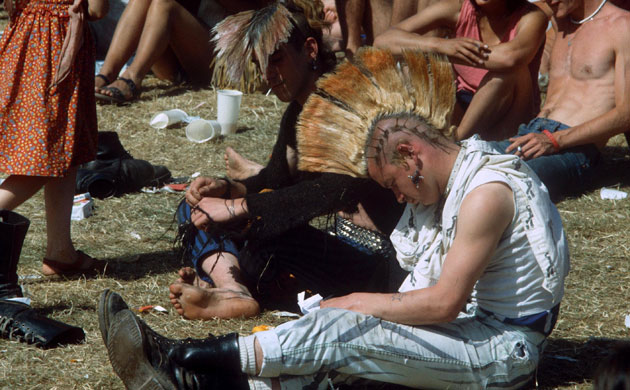
And, surely, festivals are no different? They are equally wonderful experiences, yet thousands of people fill their memory cards and drain their batteries trying to film the band from a thousand yards back. I've never seen the point. Sure, the band was great, but if you want to watch that set again, it'll probably be on YouTube, filmed properly, sounding good. There'll be great photos of the bands in the music press, and you can google them any time. If festivals were all about seeing musicians up close on screen, you'd have stayed at home and watched it on the telly.
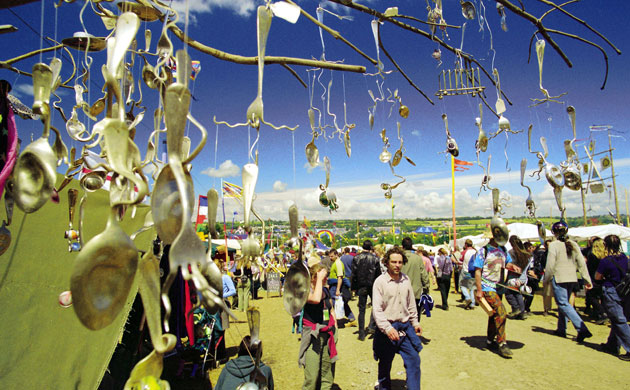
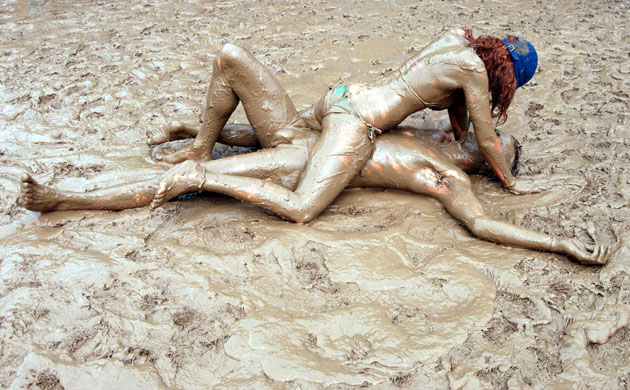
But we all know perfectly well that festivals are far more than that! An impromptu rave has just started at Joe Bananas Blanket Stall. Next to them, over there by the gate, is the stoned hippy couple trying to sell you "trash huffles". A bloke standing on the bale of straw further up the track, dressed only in a marine survival suit, is lecturing nobody in particular about the big wet of 1998, and how he hated Galliano with a passion, but they were good live. And is that Michael Eavis climbing a tree?
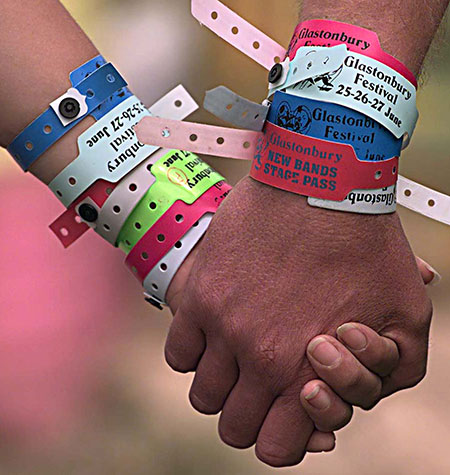
The photos you take of what's going on around you are the ones you'll treasure. I promise. They'll bring back memories of happy days in the sunshine (hopefully), they'll age in an splendid way, to tell a story of that festival you went to, that weekend, back then. Wearing that.
A few hints...
- Get comfortable with the modes of your camera, so you know you can take a photo quicky without too much faff. Don't worry about getting it exactly right. At a festival, things are going on all around you, all the time. You want to capture the moment and not miss it for the sake of composition or exposure.
- If you can avoid using the built in flash, avoid using it. Even on expensive cameras, they're harsh and unforgiving and artificial. With a bit of practice, a steady hand, and some tolerance of a bit of imperfection and blur, you can often get much more atmospheric results without it.
- Get a photo editor package and learn a few basic tricks. The software doesn't have to be expensive (in fact, GIMP is marvellous, open-source, and entirely free). Learn some simple tricks like cropping, contrast and brightness adjustment, then play with curves and colour saturation. It's easy to get good results quickly, and you can turn often workable photos into really good ones. If a photo seems irretrievably dark, try converting it to black and white and pushing the contrast and brightness up.
Above all, have fun!